
Weeds and other invasive plants
Some plants introduced to New Zealand have become invasive within our coastal and freshwater environments. These species often spread rapidly, outcompete desirable vegetation and alter the natural processes that shape dunes, wetlands and waterways. Managing invasive plants creates opportunities for healthier ecosystems to recover and allows indigenous and beneficial species to re-establish and thrive. Pest plant control is often one of the first and most important steps in ecological restoration. Every invasive plant removed creates space for stronger biodiversity and healthier environmental outcomes for Waikawa Beach.
To help identify pest weeds in our backyards, the wider local environment and to provide guidance on restoration of our sand dunes back to their natural state, Horizons Regional Council have provided a flyer titled Coastal Weeds to Manage for Sand Dune Restoration.
The primary control methods recommended are hand-pulling and the application of herbicide gel. Ensure you identify the most suitable gel for the target species and carefully review the product's safety instructions for correct health & safety protocols before use. Any spraying must be undertaken by a trained and competent operator. For detailed guidance on control techniques specific to each plant type, visit www.weedbusters.co.nz
To read the full HRC flyer, including a comprehensive list of coastal weeds, click here or click on the flyer image.
The content shown below has been compiled by WBEG from various sources. More comprehensive information on each plant can be accessed by clicking on an image.


Pampas
Pampas is a large-clump-forming grass (<4 m+). It colonises sprayed, burnt, slipped and otherwise disturbed sites and quickly becomes dense. Pampas replaces groundcovers, shrubs, and ferns, creates fire hazards, provides habitats for possums...

Lupin
Lupin is a short-lived, perennial shrub (<2-3 m tall) with deep taproot and tough, branching stems. It lowers light levels in open habitats, causing subsequent invasion by weedy shrubs, vines, wilding pines, etc. It causes sand to build up, altering the shape...

Blackberry
Blackberry is a scrambling, very thorny, semi-erect shrub that is usually deciduous, with large root crowns and long suckers. Stems arching (occasionally semi-prostrate), entangled, green or red and occasionally taking root when in contact with the ground...

Gorse
Gorse is a sharply spiny shrub (<2-3 m tall) with woody erect or spreading stems which are many-branched in younger plants but become bare at the base as the plant gets older. Leaves are reduced to spines, new leaves less so. Forms pure associations...
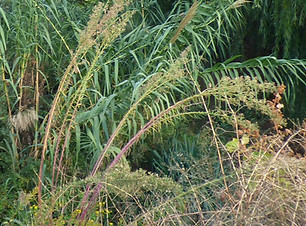
Fleabane
Fleabane is an increasingly common invasive weed within coastal environments, disturbed ground and open sandy areas. While the small white flowers can appear harmless, the plant produces large quantities of wind-blown seed and can quickly establish dense...

Coastal Wattle
Coastal Wattle is a shrub to small tree with sharply angled, hairless or sparsely angled twigs. Numerous small, puffy, pale to golden yellow flowers appear in cylindrical spikes. It forms dense stands in disturbed and bare sites, and prevents native species from...
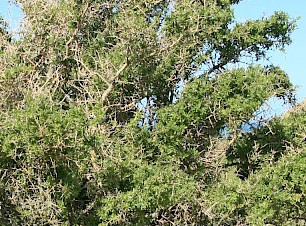
African Boxthorn
African Boxthorn is one of the more aggressive woody weeds found in coastal environments. This dense, thorny shrub can grow several metres high, forming impenetrable thickets that exclude native vegetation and alter important wildlife...
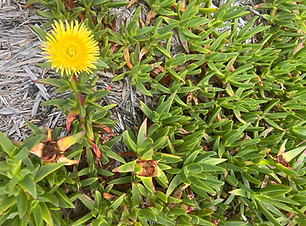
Giant Iceplant
Giant Iceplant is a fast-growing succulent that was originally introduced as an ornamental plant and for erosion control but has since become invasive in many coastal environments. Its sprawling growth habit allows it to quickly form dense mats that...

Marram Grass
Marram Grass is an introduced dune species that was widely planted throughout New Zealand during the twentieth century to help stabilise shifting sand dunes. While effective at trapping sand, Marram creates steep, narrow dunes that behave very differently...