
Our environment
Waikawa Beach is a small coastal community shaped by water
From the dunes and open coastline to the stream, wetlands and estuary, each part of our landscape is connected and contributes to the health and resilience of the wider environment.
Today the community includes the established village near the mouth of the Waikawa Stream, the newer homes of Waikawa Heights overlooking farmland to the east, and the more recent development around Strathnaver Drive and Reay Mackay Grove to the south. Together these areas sit within an environment that is both diverse and remarkably rich in biodiversity.

Early morning mid winter Waikawa Beach
The Waikawa Stream begins its journey in the foothills of the Tararua Ranges before winding its way through farmland and our community to the sea.
Its waters eventually flow through the Waikawa Estuary, one of the area's most important and ecologically valuable habitats. Here, freshwater and saltwater meet to create a rich and productive environment supporting native plants, fish, invertebrates and birdlife.

Sports day on the awa is a well loved tradition
The stream, estuary, wetlands and dune systems function as one interconnected environment, supporting resident and migratory birds while providing feeding, breeding and nursery habitat for many species.
This reflects the Te Ao Māori principle of Ki uta ki tai – recognising the connection between the mountains, rivers, wetlands, estuaries and sea, and the importance of caring for the whole system rather than its individual parts.
The awa has long held cultural significance and continues to support species important within Te Ao Māori, including tuna (eel), patiki (flounder) and īnanga (whitebait). These waterways remain an important part of the identity and history of Waikawa Beach and reinforce the close relationship between people and the natural environment.
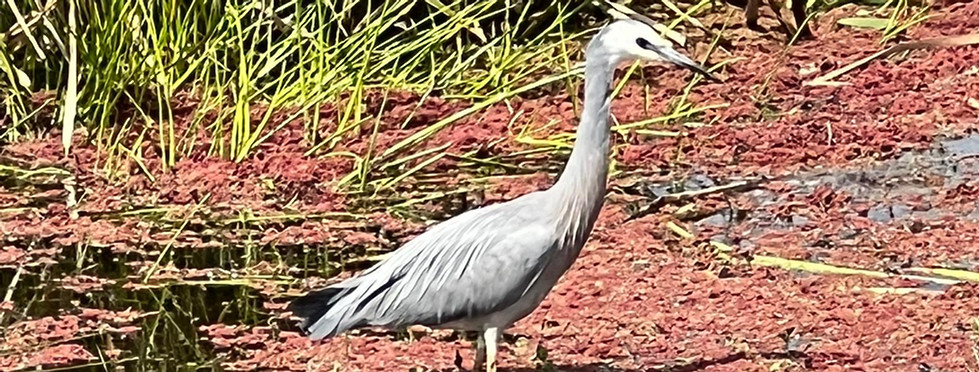
White-faced Heron in local wetland
Beyond the footbridge to the north lies an extensive wetland system supporting native wetland plants, waterbirds and a diverse range of wildlife. Together with the estuary, these wetlands help filter water, store floodwaters and provide habitat for species that are increasingly uncommon elsewhere along the coast.
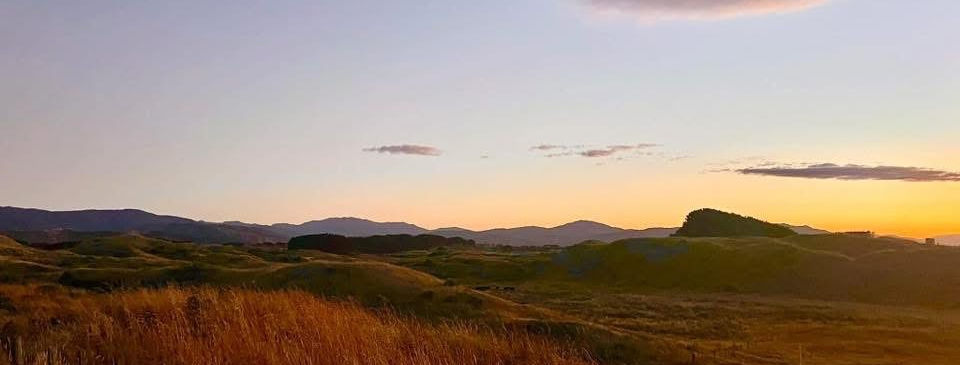
Looking south east across farmland with the Tararua ranges in the distance
Like many lowland waterways throughout New Zealand, Waikawa Stream faces challenges associated with water quality, sedimentation, nutrient inputs and the ongoing pressures of development and land use change within the wider catchment.
Protecting and improving freshwater quality is therefore not simply about the stream itself. Healthy waterways support healthy wetlands, healthier estuaries and ultimately a healthier coastal environment.
This understanding sits at the heart of much of WBEG's restoration, monitoring and advocacy work.

Waikawa Beach is a very special place all year round
The combination of stream, estuary, wetland, dune systems and a naturally high water table has created an environment that is unique within the Horowhenua coast and one that continues to reward those who take the time to look closely.
With careful management, strong partnerships and community involvement, we believe the environment of Waikawa Beach can continue to thrive for generations to come.
Photos kindly provided by Jan Jordan, Kezna Cameron and Steve Bailey